Self-Determination Cannot Be Replaced by Political Recognition: Adala UK Responds to President Trump’s Statement
Adala UK strongly condemns the statement made by the President of the United States, Donald J. Trump, on 1 August 2026, in which he reaffirmed the United States’ recognition of Morocco’s claimed sovereignty over Western Sahara and declared Morocco’s autonomy proposal to be the only acceptable basis for resolving the conflict.
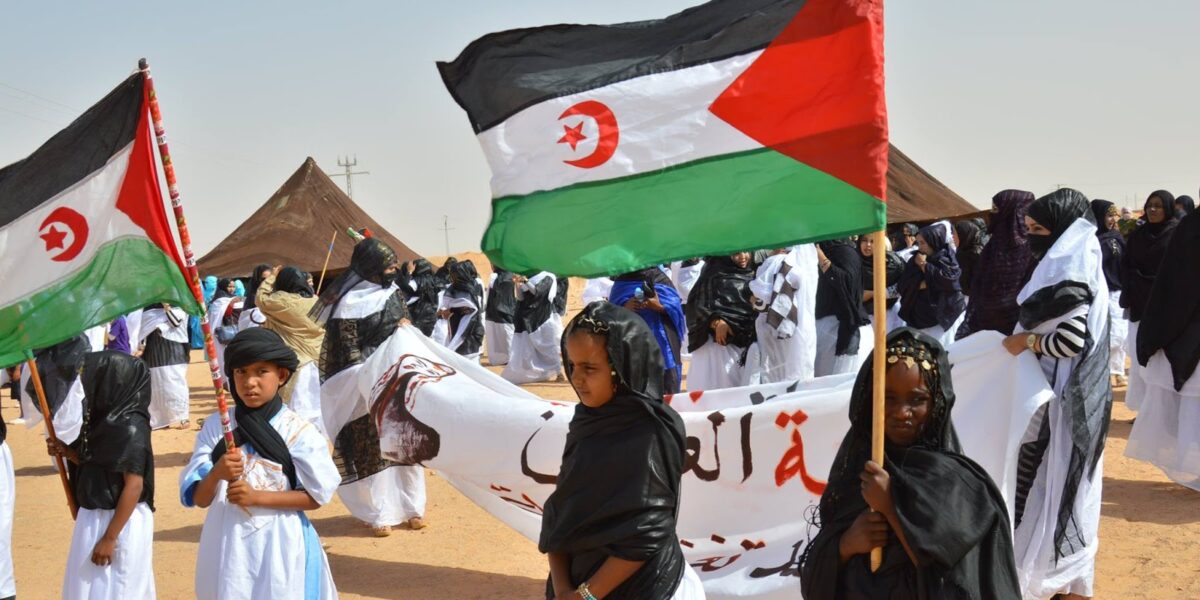
This position represents a clear political alignment with one party to the dispute and is inconsistent with the principles of international law. It undermines the inalienable right of the Sahrawi people to self-determination and prejudges a political process that remains, under international law, the responsibility of the United Nations.
The right of the Sahrawi people to self-determination is firmly established in Article 1(2) of the Charter of the United Nations, United Nations General Assembly Resolution 1514 (XV) of 14 December 1960 (Declaration on the Granting of Independence to Colonial Countries and Peoples), and United Nations General Assembly Resolution 2625 (XXV) of 24 October 1970 (Declaration on Principles of International Law concerning Friendly Relations and Co-operation among States).
The United Nations continues to recognise Western Sahara as a Non-Self-Governing Territory, whose final status has yet to be determined through the free and genuine exercise of the Sahrawi people’s right to self-determination in accordance with the UN Charter and relevant UN resolutions.
The International Court of Justice, in its Advisory Opinion on Western Sahara of 16 October 1975, concluded that the materials and information presented to the Court did not establish any tie of territorial sovereignty between the Territory of Western Sahara and the Kingdom of Morocco capable of affecting the application of UN General Assembly Resolution 1514 (XV) or the principle of self-determination through the free and genuine expression of the will of the people of the Territory.
Furthermore, the Court of Justice of the European Union has consistently affirmed that Western Sahara is separate and distinct from the Kingdom of Morocco under international law. In particular, in Council v Front Polisario (Case C-104/16 P, Judgment of 21 December 2016), and in the Grand Chamber judgments of 4 October 2024 in Joined Cases C-778/21 P and C-798/21 P, the Court confirmed that agreements concluded between the European Union and Morocco cannot lawfully apply to Western Sahara or its natural resources without the consent of the people of the Territory.
By declaring Morocco’s autonomy proposal to be the “only” acceptable solution and rejecting all alternatives, President Trump has demonstrated beyond doubt that the United States is no longer an impartial actor in this dispute. A State that has publicly adopted the legal and political position of one party cannot credibly serve as a neutral facilitator or oversee negotiations between the Kingdom of Morocco and the Frente POLISARIO.
Adala UK therefore considers that the United States is not an appropriate or credible party to oversee or facilitate negotiations concerning Western Sahara. Any mediation process must be impartial, firmly grounded in international law, and conducted under the exclusive authority of the United Nations without prejudice to the Sahrawi people’s inalienable right to self-determination.
We call upon the international community to reject unilateral attempts to predetermine the outcome of the conflict and to reaffirm its commitment to the rules-based international order and the principles of the Charter of the United Nations.
We further call upon the European Union to continue respecting and implementing the judgments of the Court of Justice of the European Union concerning Western Sahara and to ensure that all its agreements remain fully consistent with international law.
Finally, Adala UK urges the Government of the United Kingdom, as a Permanent Member of the United Nations Security Council and a State with a longstanding commitment to the international rules-based order, to exercise principled leadership by reaffirming that the status of Western Sahara can only be determined through the exercise of the Sahrawi people’s right to self-determination. We further call upon the United Kingdom to work within the Security Council to safeguard the impartiality and integrity of the UN-led political process and to oppose any unilateral measures that seek to prejudge the final status of the Territory outside the framework of international law.
No unilateral political declaration can alter the international legal status of Western Sahara or extinguish the Sahrawi people’s inalienable right to self-determination. A just, lasting and peaceful resolution can only be achieved through full respect for international law, the Charter of the United Nations, and the freely expressed will of the Sahrawi people.