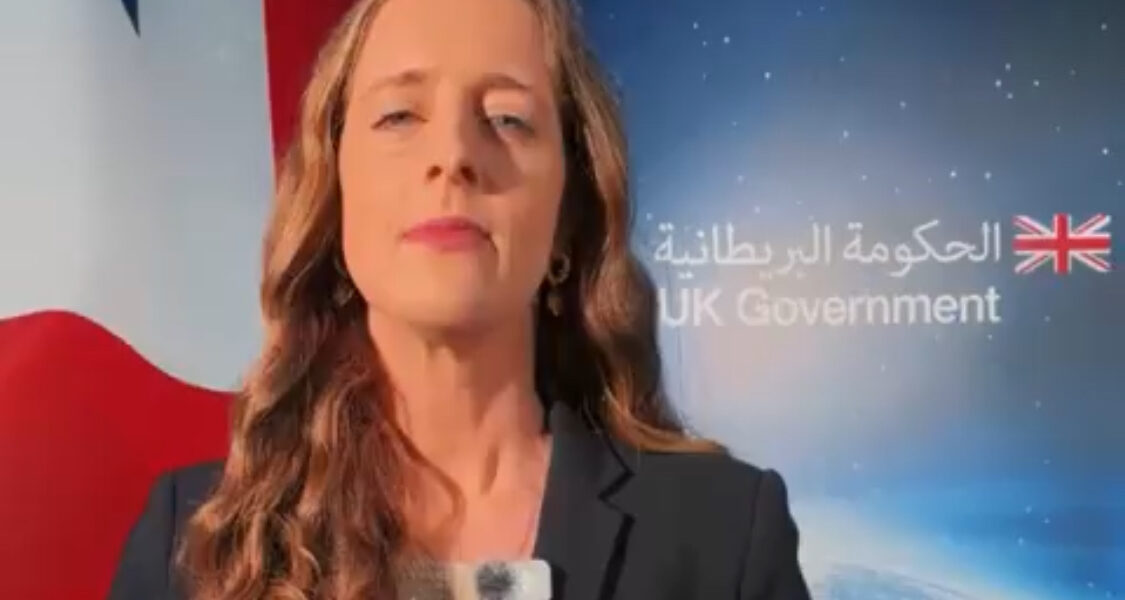
ADALA UK CONDEMNS THE BRITISH GOVERNMENT’S POSITION AND REJECTS ANY ATTEMPT TO PREJUDGE THE SAHRAWI PEOPLE’S RIGHT TO INDEPENDENCE
Adala UK strongly condemns the remarks made by the British Government’s Arabic-language spokesperson, Jocelyn Waller, in her recent interview with the Moroccan newspaper Hespress, in which she reaffirmed the United Kingdom’s support for Morocco’s autonomy proposal, describing it as the “most credible and pragmatic basis” for resolving the question of Western Sahara. The organisation also rejects her criticism of Russia’s veto of the United States-sponsored Security Council draft resolution.
These statements reflect a deeply concerning political approach that places diplomatic interests and geopolitical calculations above the fundamental rights of the Sahrawi people.
Adala UK reiterates that Western Sahara remains an unresolved question of decolonisation, not a matter of Moroccan sovereignty to be settled through international political endorsement. The Sahrawi people alone have the right to determine their political future freely, including independence, without coercion, external pressure or an outcome imposed by foreign governments.
Morocco’s autonomy proposal cannot replace the Sahrawi people’s right to self-determination, nor can it be presented as the predetermined or exclusive basis for negotiations. Western Sahara remains on the UN list of Non-Self-Governing Territories, and any legitimate settlement must preserve the Sahrawi people’s genuine freedom of choice, including independence. No foreign government has the authority to negotiate away that right.
Adala UK also questions the British Government’s expression of regret over Russia’s veto. The United States-sponsored draft placed Morocco’s autonomy proposal at the centre of the political framework, raising serious concerns about the restriction of the Sahrawi people’s choices and the weakening of the UN-led decolonisation process. Russia opposed that draft and subsequently proposed a further one-year extension of MINURSO’s mandate. While Adala UK does not endorse Russia’s wider foreign policy, its position in this particular case must be assessed on its substance and implications for international law, rather than dismissed because of geopolitical rivalries.
International law must not become subordinate to political alliances. A proposal does not become lawful simply because Washington or London supports it, just as a position cannot be dismissed merely because Moscow advances it.
The organisation further recalls that MINURSO was established under Security Council Resolution 690 (1991), in connection with the UN Settlement Plan and the referendum intended to allow the people of Western Sahara to determine their future. The referendum was central to the mission’s original purpose and cannot simply be discarded when it becomes politically inconvenient. Any attempt to marginalise it or transform the mission into an instrument for advancing one party’s political preferences undermines the credibility of the international decolonisation process.
Adala UK also draws attention to the inconsistency in British foreign policy. The United Kingdom rightly defends Ukraine’s sovereignty and territorial integrity and calls for respect for international law. Yet, on Western Sahara, it appears willing to support an approach that prioritises Morocco’s proposed arrangement under its sovereignty without placing the Sahrawi people’s right to self-determination at the centre. Although the legal and historical circumstances of the two cases differ, international law cannot be applied selectively according to political convenience or strategic alliances. It cannot be defended in Europe while being diluted in North Africa.
Nor can economic interests, regional security, diplomatic partnerships or political pragmatism justify the exclusion of the Sahrawi people from decisions concerning their future. A lasting peace cannot be built by denying a people their fundamental rights. Peace without justice is not a settlement, and negotiations that exclude genuine self-determination cannot constitute a legitimate resolution.
Adala UK therefore calls upon the British Government and the Foreign, Commonwealth and Development Office to reconsider their position, reject any predetermined or exclusive framework based on Morocco’s autonomy proposal, reaffirm the Sahrawi people’s inalienable right to self-determination, including independence, and defend the original referendum-related purpose of MINURSO. The United Kingdom must also ensure that its position within the Security Council is guided by the UN Charter and international law, engage with the legitimate representatives of the Sahrawi people, and ensure that their freely expressed wishes remain central to any future political process.
As a permanent member of the Security Council, the United Kingdom has a particular responsibility to uphold the credibility of the United Nations and prevent the rights of the Sahrawi people from being sacrificed for geopolitical arrangements.
Adala UK will continue to challenge any government or international power whose policies undermine the Sahrawi people’s right to determine their own future.
The future of Western Sahara belongs to the Sahrawi people. Moroccan sovereignty cannot be imposed as a substitute for their freely exercised right to self-determination.
Independence must remain a genuine option. The referendum must not be erased. Decolonisation must not be abandoned.
International law must prevail over occupation, political expediency and geopolitical interests.