Morocco Prevents Human Rights Delegation from Investigating Western Sahara Violations
Adala UK strongly condemns the expulsion and denial of entry of an international political and human rights delegation from the Canary Islands by Moroccan authorities at El Aaiún Airport, the capital of the occupied territory of Western Sahara, on or around 13 January 2026. This arbitrary and unlawful act constitutes a serious violation of international law, including international human rights law, and represents a further escalation of Morocco’s long-standing policy of suppressing independent human rights monitoring, parliamentary observation, and press freedom in Western Sahara.
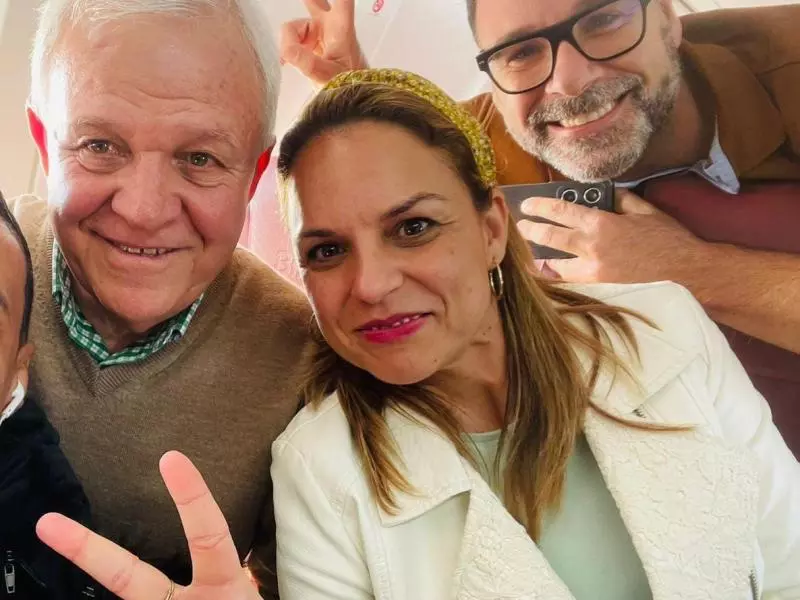
On that date, Moroccan authorities prevented the delegation from disembarking at El Aaiún Airport and forcibly returned them to the Canary Islands without any legal justification or due process. The delegation comprised Mr Carmelo Ramírez, Councillor for Institutional Cooperation and International Solidarity of the Cabildo of Gran Canaria and President of the Federation of Institutions in Solidarity with the Sahrawi People (FEDISSAH); Ms Noemí Santana Perera, Member of the Spanish Parliament (Congress of Deputies) representing Podemos; and Mr Fernando Ruiz Pérez, Secretary of Communications of Podemos Canarias. The delegation was undertaking a peaceful and lawful mission to observe the human rights situation in El Aaiún, meet Sahrawi human rights defenders, and document systematic and widespread violations suffered by the Sahrawi civilian population.
Upon arrival, individuals in civilian clothing, later identified as members of Moroccan security services, physically blocked the aircraft door and prevented passengers from disembarking. They refused to identify themselves or provide any legal basis for their actions, ignored repeated requests from the aircraft commander, and continued to obstruct the exit despite being informed that the aircraft was under Spanish jurisdiction at the time. The delegation remained confined to the aircraft for approximately twenty minutes while seeking clarification and requesting permission to enter solely for the purpose of human rights observation and verification of compliance with international humanitarian law. No explanation was provided. The delegation was ultimately ordered to return to the Canary Islands, amounting to a de facto expulsion carried out in complete disregard of procedural guarantees and fundamental legal norms.
This incident must be considered within the established legal framework governing Western Sahara. The territory remains a Non-Self-Governing Territory under international law, and Morocco does not possess sovereignty over it. This legal position was affirmed by the Advisory Opinion of the International Court of Justice in 1975, which found no ties of territorial sovereignty between Morocco and Western Sahara, and by repeated United Nations General Assembly and Security Council resolutions reaffirming the inalienable right of the Sahrawi people to self-determination. International jurisprudence, including decisions of the Court of Justice of the European Union, has consistently confirmed that Western Sahara is distinct from Morocco. Morocco’s presence in the territory therefore constitutes an occupation, imposing obligations on it as an occupying power under international humanitarian law.
The actions of Moroccan authorities constitute multiple breaches of international law. The arbitrary denial of entry to a human rights delegation violates the International Covenant on Civil and Political Rights, including the rights to freedom of movement and to seek, receive, and impart information. It also contravenes the United Nations Declaration on Human Rights Defenders by obstructing and intimidating individuals engaged in legitimate and peaceful human rights activities. As an occupying power, Morocco is further bound by the Fourth Geneva Convention of 1949 and is obligated to protect the civilian population and permit impartial monitoring and observation. Preventing independent observers from accessing the occupied territory to conceal violations represents a grave breach of these obligations, as well as of the purposes and principles of the United Nations Charter and customary international law.
This expulsion is not an isolated incident but forms part of a systematic policy pursued by Morocco to isolate Western Sahara from independent international scrutiny. For years, Moroccan authorities have routinely denied access to parliamentarians, journalists, lawyers, and human rights organisations in order to prevent the documentation of serious violations, including the repression of peaceful protest, harassment and criminalisation of Sahrawi activists, arbitrary detention, and unfair trials. Testimony provided to Adala UK confirms that at least thirty-five Sahrawi political prisoners and human rights defenders are currently detained in Moroccan prisons, many following proceedings that fail to meet international standards of due process. These violations occur alongside the ongoing and unlawful exploitation of Western Sahara’s natural resources, in clear breach of international law applicable to Non-Self-Governing Territories.
Mr Carmelo Ramírez confirmed to Adala UK that the mission’s purpose was to witness and denounce the grave human rights violations arising from Morocco’s illegal occupation of Western Sahara for nearly five decades, including the persistent denial of the Sahrawi people’s right to self-determination, the imprisonment of human rights defenders, and the systematic exploitation of the territory’s natural resources. Ms Noemí Santana Perera stated that the delegation was prevented from disembarking without justification, explanation, or identification by the Moroccan forces involved, despite repeated requests, and despite the delegation making clear that its sole purpose was to observe compliance with international humanitarian law.
Adala UK concludes that the conduct of Moroccan authorities constitutes an arbitrary, unlawful, and internationally wrongful act engaging international responsibility. Adala UK calls upon Morocco to immediately cease its policy of exclusion, repression, and concealment in Western Sahara, and urges the United Nations, the European Union, and the Spanish Parliament to fulfil their legal and political responsibilities by ensuring unfettered access to the territory for international observers and by establishing an effective and independent human rights monitoring mechanism, including within the mandate of MINURSO. Adala UK reaffirms, in the strongest terms, that the Sahrawi people possess an inalienable and non-derogable right to self-determination under international law, and that continued international silence in the face of these violations risks normalising impunity in an occupied territory.